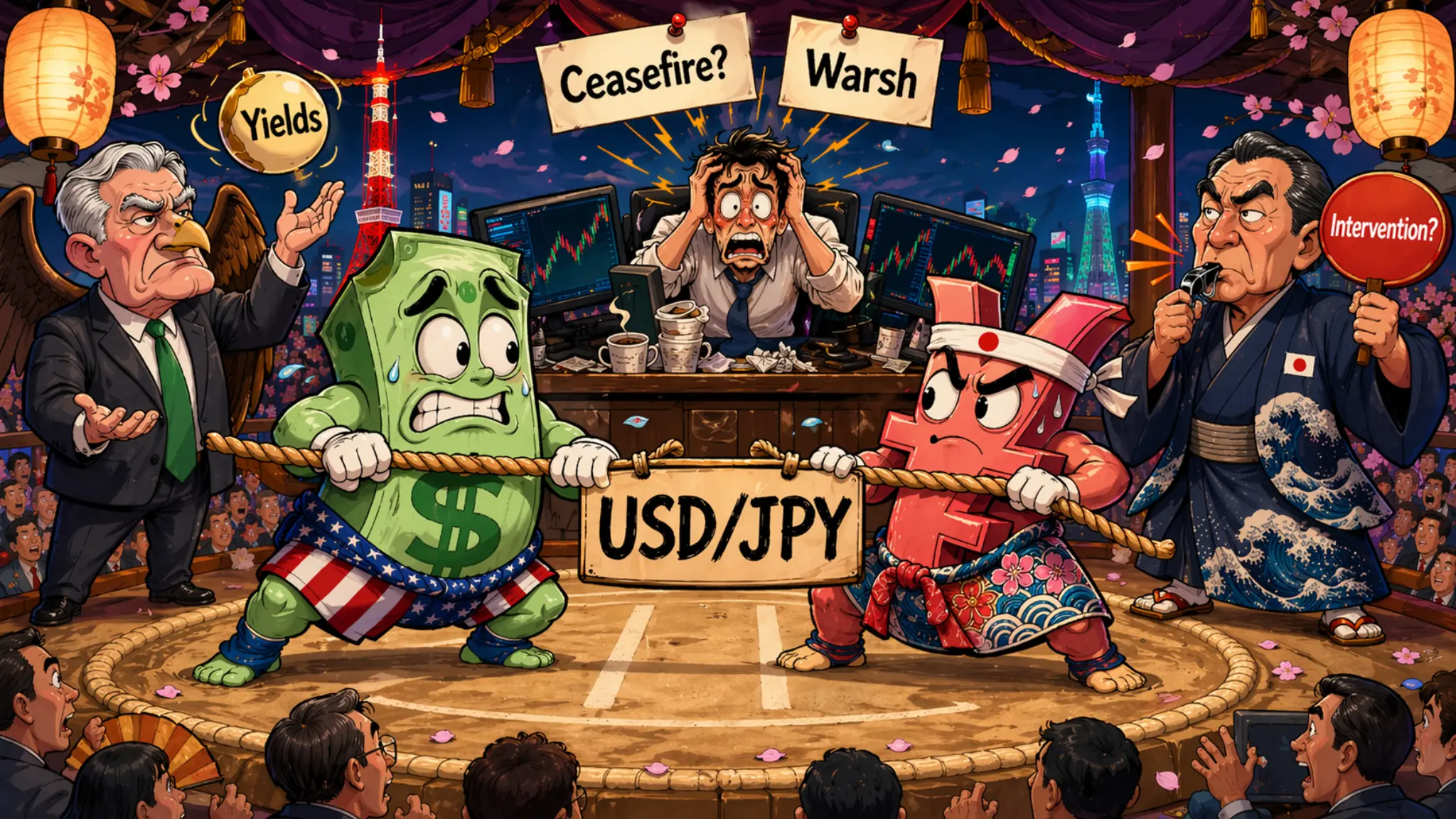
USDJPY remains one of the most closely watched pairs in the market, sitting at the intersection of U.S. yield dynamics, Federal Reserve expectations, Japanese policy sensitivity, and broader risk sentiment. For today’s session, the pair presents a tactically attractive setup as price trades in a zone where upside momentum is becoming less convincing, despite still-firm U.S. rates. The policy divergence matters, when USDJPY struggles to extend higher alongside elevated Treasury yields, it often signals a market becoming more cautious about chasing strength at stretched levels. The near-term backdrop also adds an extra layer of tension. Traders are balancing persistent U.S. policy uncertainty and rate rhetoric against the ever-present risk of official discomfort from Japan should the pair push too aggressively higher. With price action approaching levels that can attract both profit-taking and heightened sensitivity to intervention headlines, today’s focus is on whether rallies begin to fade rather than accelerate. That creates a potentially high-quality tactical opportunity if intraday resistance continues to hold. USDJPY Trade Setup: Pair (spot) Bias & Entries (updated) Stop / Invalidation Targets Why A+ (Fundamentals / Technicals / Sentiment) Price action driver Near-term catalysts (UK) USDJPY SHORT – Sell Rallies into 159.30 – 159.60 or look to sell a failure back below 159.00 Above 160.00: stronger invalidation rests above 160.40 T1: 158.40 T2: 157.80 Fundamentals: the pair is being pulled two ways, firmer U.S. rates / Warsh rhetoric support USD, but Japan intervention risk remains live and Reuters reported the BOJ is likely to hold next week because uncertainty is high, which limits clean yen-bull conviction but keeps authorities sensitive to sharp JPY weakness. Technicals: 1hr DXY chart is softer on the month and USDJPY is not extending cleanly despite still-elevated yields, which is usually a warning sign near intervention-sensitive levels. Sentiment: crowded “higher-for-longer USD” thinking is less attractive when spot is already near politically sensitive levels. Oil, USD & intervention risk Tuesday 7th April: 12:30: US durable goods / core durable goods All Day: Iran / Hormuz headlines Wed 8th April: Trump Iran Deadline. Chart by TradingView – USDJPY Trade Setup – 22nd April Conclusion Overall, the bias for USDJPY is to favor selling rallies rather than chasing upside, provided price remains capped below the key invalidation zone. The setup is supported by a combination of stretched positioning, fragile upside follow-through, and the risk that any softer USD tone or renewed intervention sensitivity quickly pressures the pair lower. As always with USDJPY, discipline is essential: this is a market that can move sharply on headlines, particularly when policy expectations and official rhetoric are both in play. For traders, the key is to remain patient and let price confirm weakness at resistance rather than forcing the trade. If the market continues to reject higher levels, downside targets come into focus quickly. However, a clean break above the invalidation zone would signal that bullish momentum is reasserting itself and the short setup is no longer valid. In short, this is a technically attractive and fundamentally credible tactical short setup, but one that requires respect for volatility and headline risk. This analysis is for informational purposes only and does not constitute investment advice. Trading involves risk; manage exposure accordingly. For similar FX Trade Setups please visit our FX Trade Ideas page. Please visit our Disclaimer page. Disclaimer Information on these pages contains forward-looking statements that involve risks and uncertainties. Markets and instruments profiled on this page are for informational purposes only and should not in any way come across as a recommendation to buy or sell in these assets. TerraBullMarkets.com does not in any way guarantee that this information is free from mistakes, errors, or material misstatements. It also does not guarantee that this information is of a timely nature. Investing in Open Markets or any financial instrument involves a great deal of risk, including the loss of all or a portion of your investment, as well as emotional distress. All risks, losses and costs associated with investing, including total loss of principal, are your responsibility. The views and opinions expressed in this article are those of the authors and do not necessarily reflect the official policy or position of TerraBullMarkets.com nor any of its advertisers. The author will not be held responsible for information that is found at the end of links posted on this page. TerraBullMarkets.com and the author do not provide personalized recommendations. The author makes no representations as to the accuracy, completeness, or suitability of this information. TerraBullMarkets.com and the author will not be liable for any errors, omissions or any losses, injuries or damages arising from this information and its display or use. Errors and omissions excepted. The author and TerraBullMarkets.com are not registered investment advisors and nothing in this article is intended to be investment advice. TerraBullMarkets...